Ask a Lennar sales consultant at Sundance Greens what the HOA fee runs and the honest answer is: it depends which collection you're standing in. Buy into the Venture Collection and you're paying about $88.67 a month. Walk two streets over into the Colonial Manor Collection and that number jumps to $269. Same subdivision, same builder, same sales office, three times the monthly bill.
That gap is not a pricing mistake, and it is not random. It is the clearest single data point I've found for something every Dayton new-construction buyer needs to understand before comparing list prices across the city's builder communities: the sticker price tells you almost nothing about what you'll actually pay every month to live there. The HOA structure does that, and in Dayton right now, it varies more within a single community than it does between communities that look nothing alike on paper.
What the Fee Sheet Actually Shows
Sundance Greens sits in southwest Dayton, generally west of Fernbrook Lane and south of Sundance Golf Course, roughly a mile from the Maple Grove border. It borders Elm Creek Park Reserve's 4,900 acres of woodland on one side and sits directly across from the Sundance Entertainment Center on the other. The city approved it as a Planned Unit Development back in 2018, originally calling for 645 residential units split between 410 detached single-family homes and a 100-unit apartment building. It's grown since, and the city is still amending it. As recently as this past summer, the Dayton Planning Commission was reviewing a Sundance Greens 12th Addition that trims a proposed 58-lot section down to 48 lots and reworks the street layout. This is not a finished neighborhood. It's an active construction site with a changing plat.
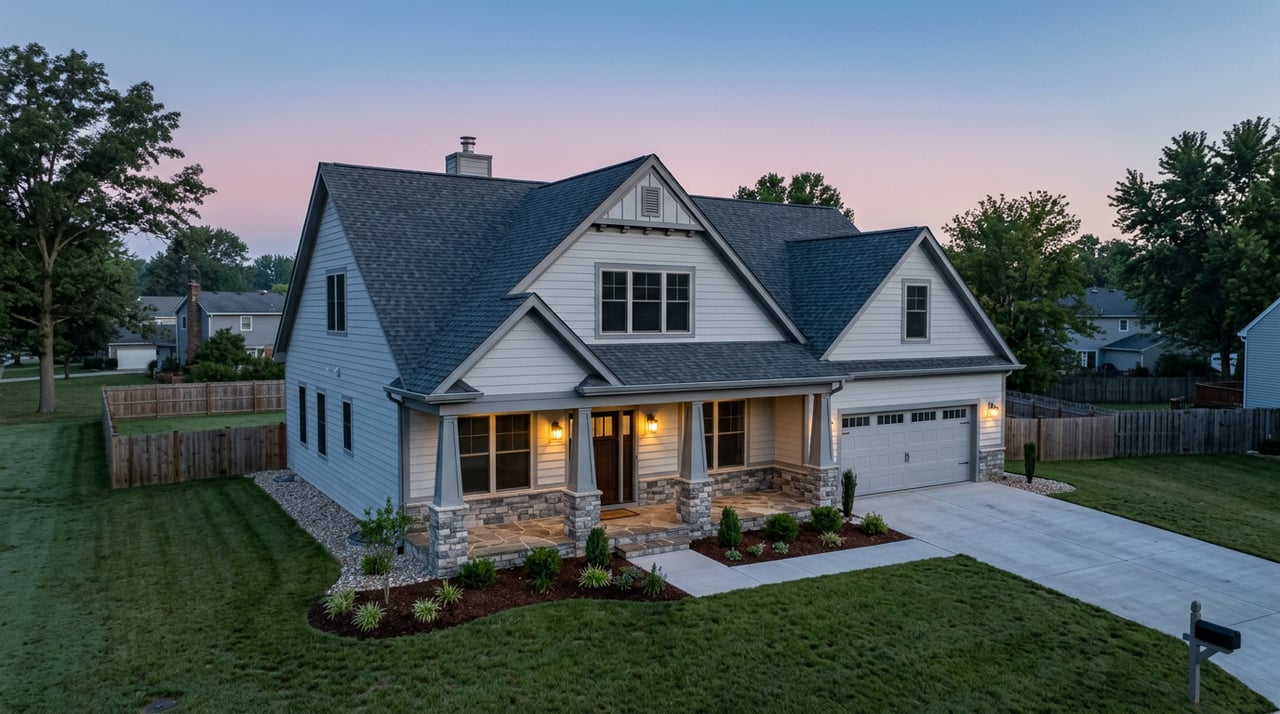
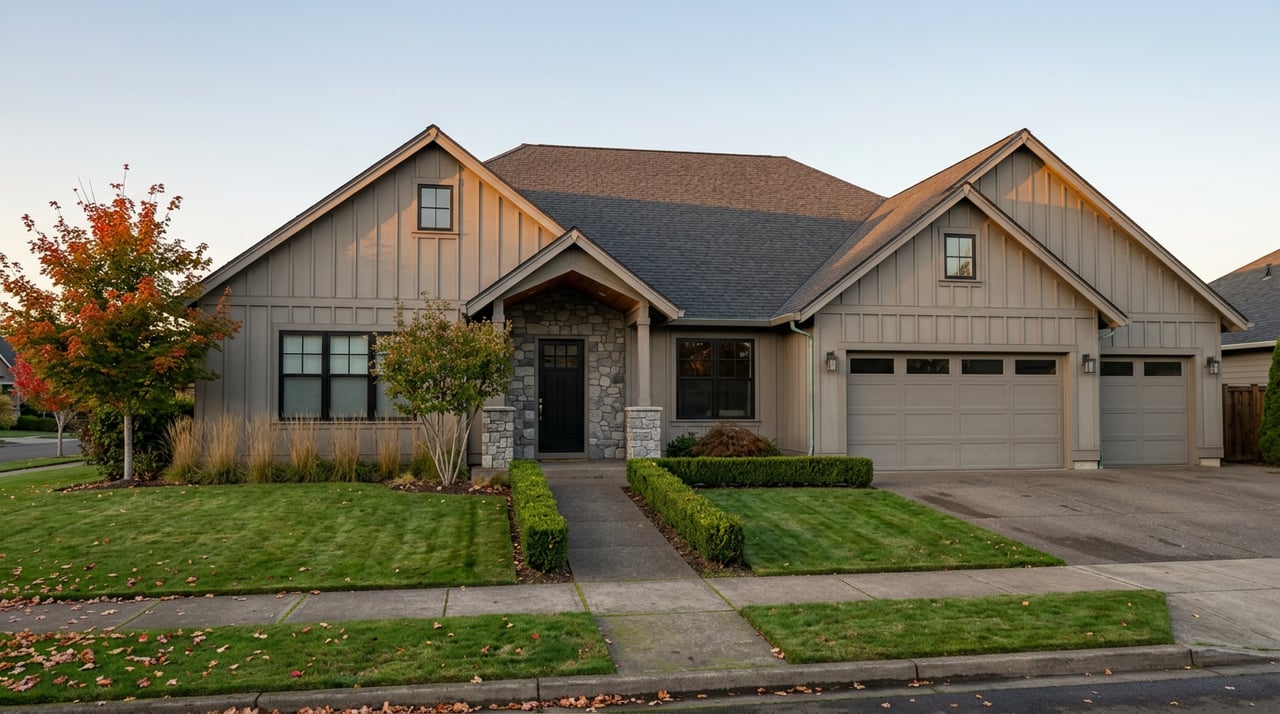
Inside that PUD, Lennar alone builds under at least six collection names, and its own published fee sheet lays out the dues plainly:
- Venture Collection: about $88.67 a month
- Landmark Collection: about $88.67 a month
- Prestige Collection: about $99 a month
- Lifestyle Villa Collection: about $172 a month
- Colonial Manor Collection: about $269 a month
- Colonial Patriot Collection: about $269 a month
Four distinct price points, all inside one community, all from one builder.
Why Attached and Detached Homes Don't Cost the Same to Own
The pattern isn't arbitrary once you know what each collection actually is. Lennar describes the Venture Collection at Sundance Greens as one-level and two-level single-family homes, and the Prestige Collection as single-family homes positioned south of the golf course. Those are the two lowest fees on the list. The Colonial Manor Collection, on the other hand, is explicitly marketed as a townhome product, sharing walls and rooflines across multiple units. That's the $269 tier.
Detached homes generally only need their HOA to cover shared amenities and common ground: the pool, the pond, the trails, the entrance landscaping. Attached product usually needs the association to also cover exterior building upkeep across shared structures, which is a bigger, more expensive job. Lifestyle Villa lands in between at $172, consistent with a one-level, low-maintenance villa format that isn't fully single-family but isn't a townhome either.
So the real variable in that fee sheet isn't luxury or square footage. It's whether you own a standalone structure or share a wall and a roofline with your neighbor. That distinction moves your monthly cost by nearly $200 before you've priced a single upgrade.
The Same Math Plays Out Across Dayton, Not Just One Subdivision
Widen the lens past Sundance Greens and the pattern holds. Riverwalk, built primarily by M/I Homes near the Mississippi River with boat launch access nearby, offers both two-story single-family homes and attached basement villas, meaning the same split in carrying cost exists inside that community too. Brayburn Trails, David Weekley's project on 75-plus acres of preserved wetlands with 256 homesites on mostly 65-foot lots, is built almost entirely as detached single-family, which should put its association dues closer to the low end of the range if it follows the same logic. DCM Farms, converting former Dehn family farmland into 254 planned single-family homes east of Fernbrook Lane, is another detached-heavy community. Diamond View Estates, a smaller planned community from Simmer Brothers near Diamond Lake, is being marketed around country-style single-family lots.
None of these communities are directly comparable by list price alone, and none of them should be. A buyer cross-shopping a Colonial Manor townhome against a Brayburn Trails single-family home on price per square foot is comparing two different ownership products that happen to sit a few miles apart. The fee schedule, not the community name, is the number that tells you what kind of buyer that home is actually built for.
The Number Nobody's Fee Sheet Shows Yet
There's a second layer to this that a buyer touring Dayton right now should ask about, and it has nothing to do with HOA declarations. It's who pays for the roads these new communities are straining.
As part of the overall DCM Farms development agreement, disclosed this spring when the city council approved the project's second addition, the developer is providing $2 million toward roundabout improvements on Fernbrook Lane. That funding covers the first addition's roundabout at 114th Avenue, Sundance Parkway, and Fernbrook Lane. That much is funded. But the same city memo noted the city intends to coordinate that roundabout with two more, at Rush Creek Parkway and at 117th Avenue, and as of that approval there was no full funding source or timeline secured for either one.
That gap didn't close on its own. This July, the council accepted the results of a completed Fernbrook Lane Corridor Study examining all three intersections. Updated traffic projections led the city to revise the Rush Creek Parkway roundabout to include dual through-lanes, increasing the scope of that project rather than shrinking it. The council authorized staff to begin right-of-way conversations with affected property owners but held off on approving a final design, pending those conversations.
Put plainly: the road network serving Dayton's newest subdivisions is still being negotiated intersection by intersection, in real time, while builders are actively selling homes into those same communities. That's not a red flag. Growth this fast requires exactly this kind of ongoing coordination between developers and the city. But it does mean a buyer who wants a full picture of what a home near Fernbrook Lane will actually cost to own, now and later, should ask a specific question before writing an offer: has the infrastructure serving this lot been fully funded, or is it still moving through council?
What This Means Before You Write an Offer
None of this is a reason to avoid Dayton's new-construction market. It's one of the more active corners of the Northwest Metro precisely because builders keep finding room to build there, and that pace brings real advantages for buyers willing to do a little homework. But two documents matter more than the price on the sign:
The HOA declaration and reserve study for the specific collection you're buying, not just the community name.
The most recent planning commission or city council packet covering that development, available directly through the city.
A REALTOR who spends time in new construction should be pulling both before you sign, not after.
A Short FAQ
Does a higher HOA fee mean a nicer home? Not necessarily. In Sundance Greens, the highest fee belongs to the attached townhome product, not the most expensive single-family homes. Fee level tracks maintenance responsibility, not prestige.
Can I negotiate the HOA fee down with the builder? No. Dues are set by the community's governing declaration for that collection, not by individual buyers. What you can sometimes negotiate is which collection or lot you buy into, which does change your monthly number.
How do I find out if infrastructure near a specific Dayton community is already funded? Dayton's planning commission and city council packets are posted publicly through the city's website and cover every plat amendment, developer agreement, and funding gap in detail. Your agent can also pull the specific resolution tied to a development before you write an offer.
Dayton rewards buyers who read past the list price, and new construction here moves fast enough that the fee sheet and the council packet both matter as much as the floor plan. If you're comparing communities across Dayton and want someone who reads both before you tour, reach out to Tolle Real Estate Group to schedule a consultation.