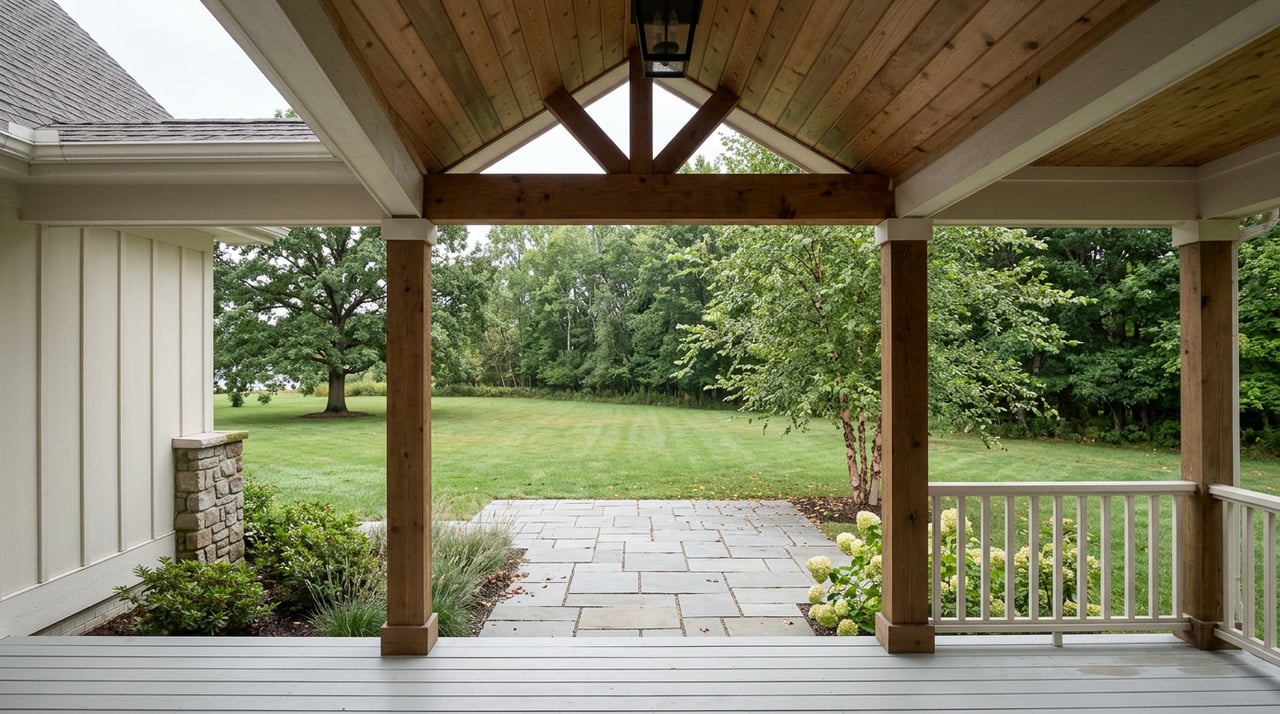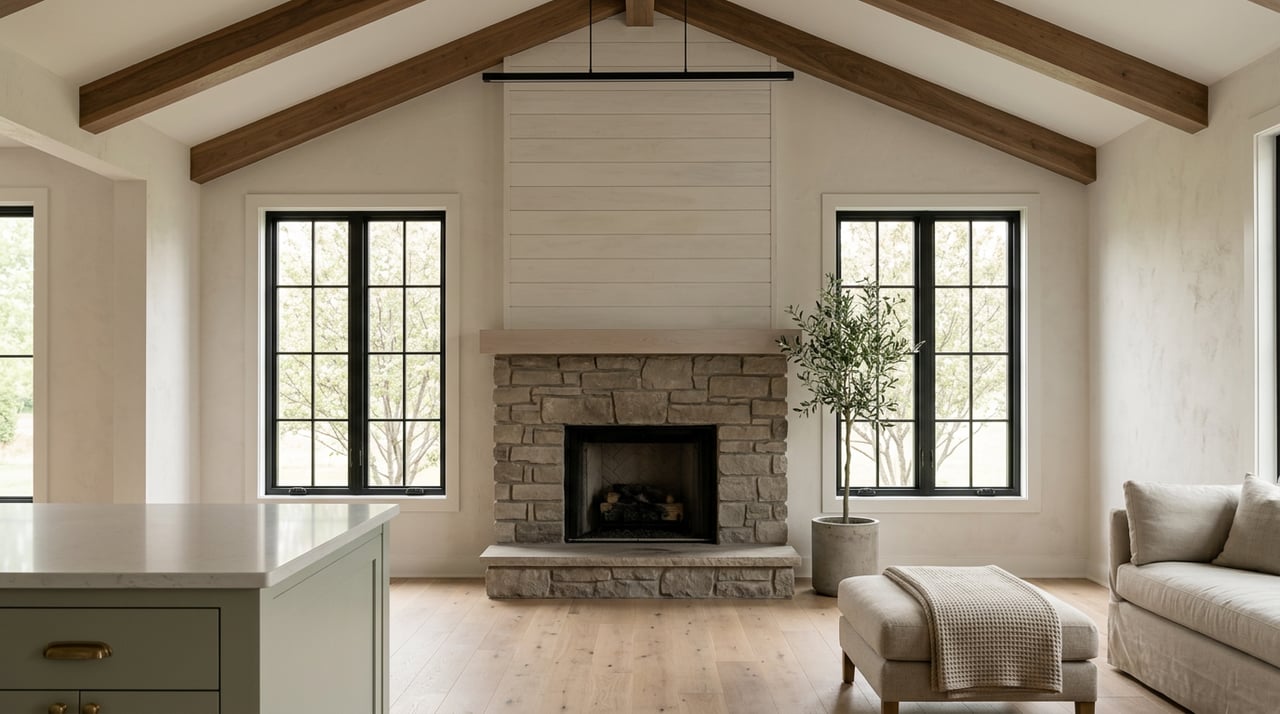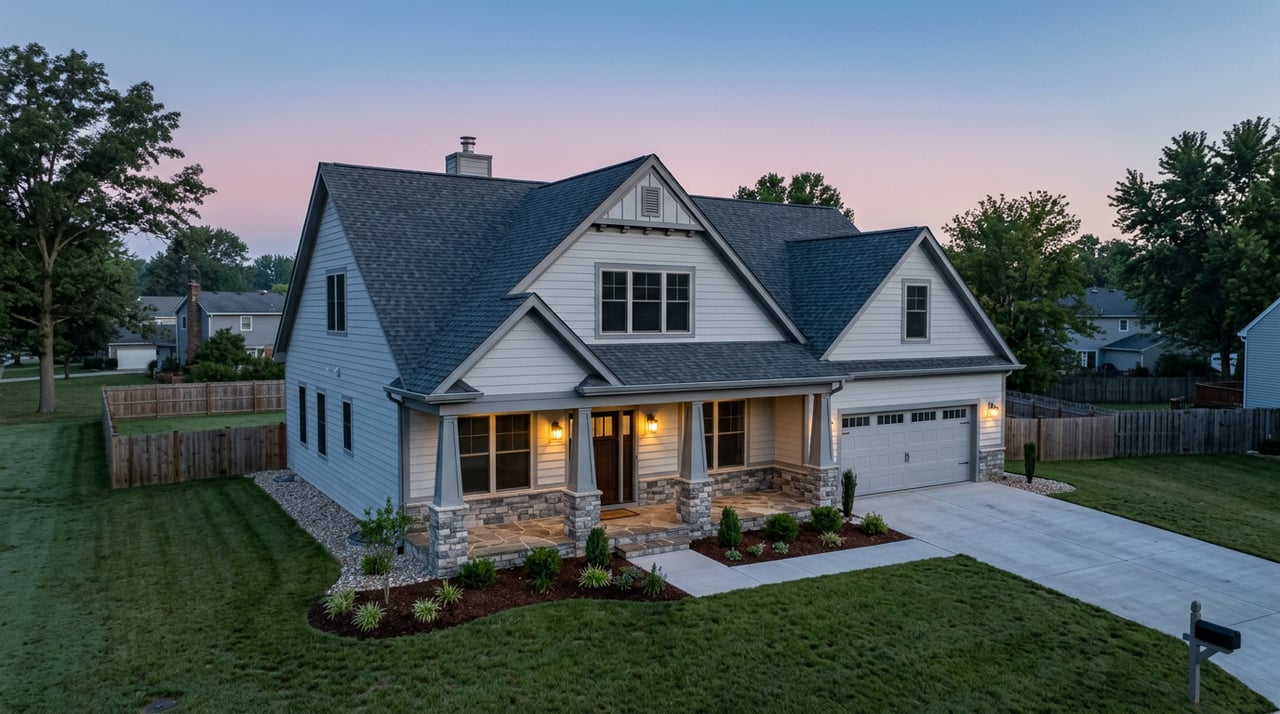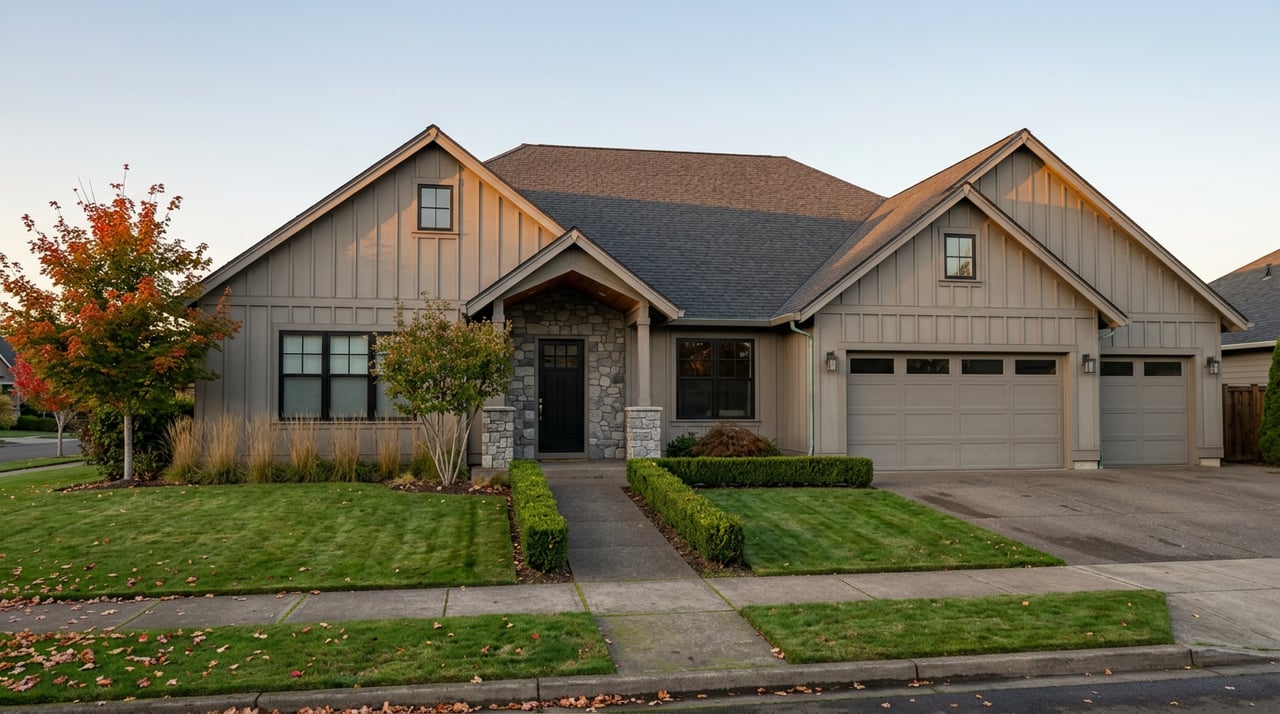
Ask a builder's sales rep in Maple Grove to come down $15,000 on a home in Rush Hollow North and you will almost certainly hear no. Ask that same rep for $15,000 in closing costs, a temporary rate buydown, or a design center credit, and the conversation changes completely. Same money. Same builder. Same house. The reason one request gets refused and the other gets granted has nothing to do with how badly the builder wants to sell you the house, and everything to do with what happens to every other home in that phase once your sale hits the county record.
That distinction matters more in Maple Grove's 55311 corridor right now than almost anywhere else in the northwest metro, because Rush Hollow alone has four different builders selling four different products on the same entrance road, each one protecting its own price ladder independently. If you're cross-shopping this stretch of the city, you're not comparing one honest price list. You're comparing four separate defenses of four separate numbers, and the difference between them shows up in places most buyers never think to look.
One Road, Four Builders, Four Price Floors
Rush Hollow sits on roughly 148 acres north of County Road 81 and west of Fernbrook Lane, next to Elm Creek Park Reserve, and it's the largest active master-planned community in the city. Inside that footprint, the product splits sharply by builder:
- The Villas at Rush Hollow are one-level slab homes on 50-foot lots with lawn, snow, and trash service included, currently priced from roughly $402,990 to $644,000.
- Rush Hollow North, built by M/I Homes, is the move-up collection, running 2,100 to 3,900 finished square feet and generally priced from the $600,000s into the high $700,000s.
- The Estates at Rush Hollow, David Weekley's product, sits on wider 75- and 80-foot homesites with three- and four-car garages and prices well above the M/I collection.
- A few miles east along Rush Creek, Evanswood is the executive tier: 227 single-family homes and 154 townhomes built by Stonegate Builders, Creative Homes, and Robert Thomas Homes, generally quoted from the $700,000s into the $1.6 million-plus range with a current median around $1.2 million.
None of these builders are pricing off each other's list. Each one is defending its own comp set, which means a buyer who treats "Rush Hollow" as a single market is missing the point entirely. You're not negotiating against a neighborhood. You're negotiating against four separate companies, each with a different reason to hold the line on price.
Why the List Price Barely Moves and the Incentive Does
Here's the mechanism that explains almost everything else in this post. A builder's recorded sale price becomes the appraisal comp for the next home they sell in that phase, and the one after that, and every resale that happens in the neighborhood for years afterward. Cut a price by $20,000 and you've just told the appraiser that the community is worth $20,000 less, on every remaining lot. That's expensive in a way a single rate buydown or closing credit never is, because those show up as a financing arrangement rather than a lower recorded sale price. The community's headline value stays intact. The buyer still gets real money.
That's why builder incentives move constantly while base prices barely budge. Earlier this year, M/I Homes ran a 2/1 temporary buydown across its Twin Cities communities, dropping the first-year rate to 2.875 percent on contracts signed between May 28 and June 21, with a required close by the end of August. The signing window is already closed, and whatever replaces it will look different, because the incentive is the lever builders pull when they need to move inventory without touching the number that shows up in the sale record.
If you're comparing Rush Hollow North's $600,000s against Evanswood's $700,000s and treating the $100,000 gap as the full story, you're missing what's stacked on top of each number. A buydown worth $15,000 in payment relief, a design credit, or a waived lot premium changes your real cost without changing the price either builder will ever admit to negotiating.
Evanswood's Price Climbs for a Different Reason Than You'd Guess
It would be easy to assume Evanswood costs more simply because the homes are bigger, and square footage is part of it. But the community was built around Rush Creek, with open space, wetlands, and a walking trail system, and that positioning is doing real work on the price. A new elementary school serving this part of the city broke ground in spring 2025 and was planned to open in time for the 2026 school year, with a trail connecting the neighboring Bella Woods community to Evanswood before linking into the Three Rivers District Regional Trail near Rush Creek. That kind of infrastructure investment, arriving alongside the homes, is part of why Evanswood's floor sits where it does rather than closer to Rush Hollow North's ceiling.
It also comes with a cost line that doesn't show up in the headline price at all. Evanswood's West Collection carries a $50 monthly HOA fee that covers ground maintenance. That's not large money over a year, but it's the same pattern as the buydown: the sticker price stays clean, and the real cost of ownership shows up somewhere else on the page.
The School Line Nobody Points to on the Site Map
Maple Grove is served primarily by Osseo Area Schools, district 279, with a portion of the city falling inside the Wayzata district, 284. Rush Hollow and the rest of the active northwest communities sit inside Osseo 279, but that boundary is drawn by exact address, not by subdivision name or builder marketing. If you're comparing a home in Rush Hollow against something a few miles away in the Wayzata pocket, you're not just comparing square footage and finish level. You're comparing two different assignment lines that can move the way an appraiser treats the property, and the only way to know for certain which side of that line a specific lot falls on is to confirm the address before you write an offer, not after.
What to Actually Negotiate, in Order
Once you understand that the list price is a floor builders defend and the incentive package is where the real money moves, the negotiation gets a lot more specific:
- Ask for the incentive menu in writing before you tour a model. Rate buydowns, closing cost credits, and design center allowances shift by builder and by how close the current phase is to selling out. What's available in September may not exist in November.
- Treat lot premiums as a separate negotiation from the base price. Walkout, pond-facing, and cul-de-sac positions typically carry meaningful premiums across new construction communities in this part of the metro, and those premiums are often more flexible than the builder's base price ever will be.
- Confirm the school district by the exact lot address, not the community name. A single subdivision can straddle a boundary, and the difference matters for how the home is valued down the line.
- Bring your own representation before you sign anything at the sales center. The person sitting across the table works for the builder, and their job is to protect that builder's number. Your agent's commission on a new construction purchase is paid by the builder as part of the transaction, which means going without one doesn't save you anything. It just means nobody at the table is working to get you a better version of the deal that's already on offer.
A Short FAQ
Does a lower list price always mean a better deal? Not necessarily. A home priced $20,000 lower with no incentives attached can cost more monthly than a higher-priced home carrying a temporary rate buydown. Compare the full package, not the sticker.
Why would a builder offer thousands in incentives but refuse to lower the price by the same amount? Because the recorded sale price sets the comp for every remaining home in that phase. An incentive doesn't touch that number. A price cut does.
How do I find out which school district a specific new construction lot falls into? Confirm the exact address against the district boundary before writing an offer. Community-wide claims about school assignment aren't reliable enough to build a decision around, since the line can run through a single subdivision.
If you're comparing builders in Rush Hollow, Evanswood, or anywhere else in Maple Grove's new construction corridor, it helps to have someone reading the incentive sheet and the plat map at the same time. Justin Tolle has spent years sitting in builder meetings on behalf of buyers, not builders, and can walk you through what a specific incentive package is actually worth before you sign. Schedule a consultation when you're ready to compare real numbers instead of headline ones.